
John Bernard’s father, Peter Molitor, emigrated from Medernach, Luxembourg in June, 1849 at the age of 41, but just after marrying Maria Thill, also from Luxembourg in Paris, France on May 10, 1848. They settled in Dacada, Sheyboygan, Wisconsin and gave birth to their first son John in June of 1849. Nine other children will be born before J. B. was born in 1867. Like Vegetable Grower Supply Co. President, J. P. Smith, he was born in the U.S. and had an extended family around him.
J. B.’s father Peter, had an older brother by three years, Mathias, who came to the United States 13 years later in 1852, but bringing his wife Margaret of 16 years and five children with him, including a 13 year old son Bernard, born about 1839. Mathias settled as a farmer and was eventually buried in Holland Township in Sheboygan County, WI. This area of Wisconsin, just north of Milwaukee and now close to the Luxembourg American Cultural Society and Center in Belgium Wisconsin, was the top landing spot for some of the first Luxembourg immigrants to Wisconsin in 1845. Some of those first immigrants to Wisconsin found their way elsewhere in Wisconsin and on to Chicago.
The following is an excerpt from a journal kept by Johann Weyker, a Luxembourg farmer who settled in Ozaukee County, Wisconsin, is representative of the first wave of Luxembourg immigrant experience:
“In the year 1845, I, Johann Weyker, a native of Oberpallen, bade farewell to Germany, i.e. the village of Sterpenich in the Province of Luxembourg and county of Arlon together with my family made up of my wife and four children, and we came hither to America. We left home on May 15th of that year and went aboard ship in Antwerp, whence we left on May 25th. The sea voyage took us 40 days and we landed happily in New York on July 4th. The fare cost 75 franks per person. And from New York to Milwaukee we travelled in a fortnight using steamer and railroad. The fare was 12 dollars per person. In Milwaukee we stayed up to four weeks. And each day we went out to have a look at the land, and finally we discovered this beautiful country near Port Washington. It deemed us most proper and so we bought land from Congress for 10 shillings per acre. That year wewere indeed the first settlers in the area around Port Washington. And in the fall of the year following we numbered already 60 German families. My implements in these early days were a few tools, some pieces of furniture like a stove, etc. and they cost me $160; add to this 6 cows for $14-15 a piece, a team of oxen for $50, a chariot for$58 and victuals to start with for $150.”
The Weyker family, who arrived in New York aboard the ship Silvanus Jenkins along with fifteen other families, were among the first Luxembourg settlers of Ozaukee County, Wisconsin. All of the families were from villages along the new border between Luxembourg and Belgium and from the Belgian province of Luxembourg, which had been part of Luxembourg until six years prior to the Weyker emigration. Whatever their professions in the old country – the majority were Tagelöhner, “day laborers” – nearly all immigrants became farmers upon their arrival in America.
From: https://www.wikitree.com/wiki/Weyker-4 and RootsWeb and Luxembourgish Immigration to Chicago
J. B.’s older cousin, Bernard, ended up being one of the early settlers in Taylor County, Wisconsin, (including the town of Molitor, Taylor County, Wisconsin which was first settled by Bernard’s brother William in 1878). While Bernard grew up in Sheboygan County, WI after arriving at age 13, he eventually left to work in the lumber industry in Michigan for a few years, married Catherine Winkil, a daughter of Luxembourg immigrants, in 1868, bought a farm in Fayetteville County, IL (east of Saint Louis) from 1867 to 1878, but returned to Sheyboygan and five years later took on a previously abandoned homestead claim of 160 acres in Medford, Taylor County, WI. Bernard established a key trading post for lumberman, traders and Native Americans. Over time, Bernard acquired more land (total of 320 acres) and held local public offices.
Back in Sheboygan Wisconsin, J. B. Molitor’s two older brothers, Peter (born in 1857) and John (born in 1859), both left their birthplace and settled in Taylor County, WI, with Peter working in the lumber industry and John as a farmer.
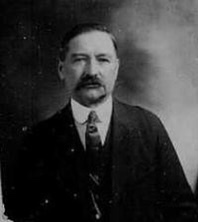
J.B. appeared to have been a man on the move along with some of his siblings. He married Jennie Klotz (more on the Klotz sisters in upcoming posts) in 1892 in Chicago, and in 1900 was located in Ward 27 of Chicago (near present day Logan Square) as a carpenter with three kids, a sister (Lizzie Duschere), a niece (Martha Duschere, 2) and a brother (Nick, 35). Lizzie would later move to La Cross, WI and by 1920 locate in Detroit MI with her husband Ernest and her daughter.
Between 1892 and 1900, J. B. had one child (Robert John) born in 1893 in Chicago, one child (Eva Marie) born in 1895 in Hilbert, Calumet County, WI (east of Lake Winnebago, near of Appleton, WI), and another son (Albert James) born in 1898 in Chicago, IL. In 1899, his sister, Barbara, dies at age 44 in Aurora, Kane County, IL.
Still on the move, in 1901, J.B. Has another son, Joseph P. L, born in Plainville, Adams County WI (just north of the Wisconsin Dells). In 1903, he has a son James P. in Chilton, Calumet County, WI (due east of Lake Oshkosh). 1906 he has another son, Alex P. In Hilbert, Calumet County, WI (just 7 miles due north of Chilton). He has another son born in 1909 and in the 1910 census was listed in Chilton, Clement County, WI with Jennie, his children and brother, Nicholas, as owning and working a farm. By 1912, he appears to be back in Chicago, unfortunately with a death of a young son James P. By the time of the formation of the Vegetable Growers Supply Co., he is owning and operating a greenhouse in Rogers Park.
The older Molitor brothers (J. B.’s uncles and father), Mathias (born 1804, arrives 1852), Peter (J. B.’s father, born 1807, arrives 1849), Theodore (born 1810, arrives 1858), and Nicholas (born, 1814, arrives between January 1849 and 1854), all get settled in Wisconsin in the 1850s and their children become farmers and involved in the lumber industry. More significantly, Taylor County, Wisconsin, is right in the middle of the region where the new Vegetable Grower’s Supply Company was looking at sourcing lumber from nearby lumber mills.
J.B.’s extended family immigration well before the big wave of Luxembourg immigrants in the 1880s, his own back and forth between Chicago and different parts of Wisconsin, his knowledge of carpentry as well as his and his family’s knowledge of the Wisconsin lumber industry, likely proved instrumental for quickly sourcing lumber for lettuce and vegetable boxes in Chicago.
But what drew J. B. away from Wisconsin to come to Chicago as a carpenter? Quite possibly he had an older cousin, John (brother of the Taylor, County Bernard Molitor and son of the first Molitor in Sheboygan Mathias) who lived in Chicago between 1870 and his death in 1911 and worked as a carpenter. Did J. B. feel the need to seek opportunity in the rapidly growing city of Chicago and follow in his older cousin’s footsteps? Did his relationship with his sister, Barbara, who settled into a farm in Aurora, Kane County, Illinois, encourage him to seek opportunity in Chicago?
Regardless of his motivations, two facts stand out. First, his extended family’s settlement in Wisconsin gave him good connections to lumber mills in Wisconsin. Second, like many Luxembourg immigrants, he gets drawn to the burgeoning financial opportunities in greenhouse truck farming in Rogers Park and Chicago. Whereas fellow founder J. P. Smith brought deep Rogers Park connections and access to banking and construction, J.B. Molitor provided the Luxembourg greenhouse growers with access to lumber and knowledge of carpentry. The formation of Vegetable Growers Supply Co. was made possible by the fortuitous and productive family connections between the first wave of Luxembourg immigrants in the 1840s and 1850s.
As we will see in future posts, we will see many examples of this intertwining of family relationships.


Leave a Reply